From Kenya Hara's book on Designing Design, p.169-201, where he talks about books as Information Sculpture. He argued that under the evolution of information technology leg to the foundation of more and more information formats. Under this development, it might be possible that books have already stepped down from their traditional role as information medium. Ebooks replace conventional books nowadays. Faster, lighter and condensed within a gadget.
But he consider us to reevaluate what a book is.
He stated about the most primary material of a book, paper. Where in comparison to the speeding up of information transfer, we view paper as "a kind of unconscious surface", taken for granted. So much so when human moves to monitors, we consider our era the "paperless" era, as mentioned by Kenya Hara.
Reviewing books as information sculpture in comparison to the IT, such information like letters printed on paper, the weight of the book, the senses we connect while flipping a book are irreplaceable with technology. No doubt that one day technology might be able to achieve that. A physical book is merely text and images complied but as a whole, sending and connecting information with our past, senses and that very moment of viewing the book. "...we may have a more pleasant user experience and be more satisfied with information presented on a material of moderate weight and texture than information whose presence has become rarified through compression into a tiny space." (p.198)
This continual interest in materiality and connection with sensory of books triggers my thoughts on how I can rekindle the position of a book in the IT world. The emotion attached to reading from a piece of printed paper versus holding a screen reading is totally different in experience. Basic elements of design comes into place where printed materials has margins, borders, white spaces for reading to read at ease. Texture of the paper could be customized according to preferences. The environment lighting that affects our reading atmosphere all merge in as one experience to read on something physically printed. What's more? The excitement it creates when one opens up a new book, smelling the ink and paper. The experience consist of many dimensions,
which further define the stand of a book in this digital world.
Wednesday, December 2, 2009

Blackbox2
Unexpected and provocative book created by designers for designers by Brand Managers for brand
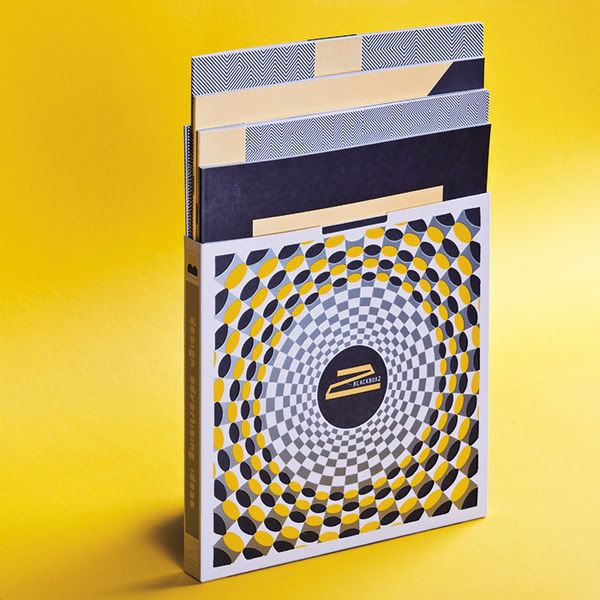
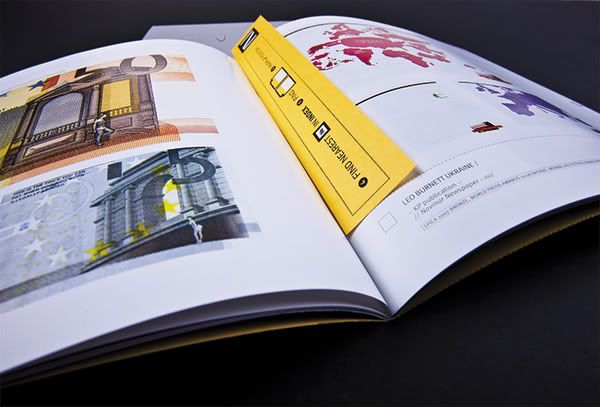
A design catalogue by Victor Konovalov
A design catalogue by Victor Konovalov
Tuesday, December 1, 2009
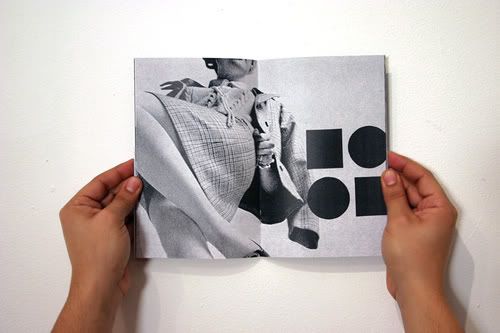
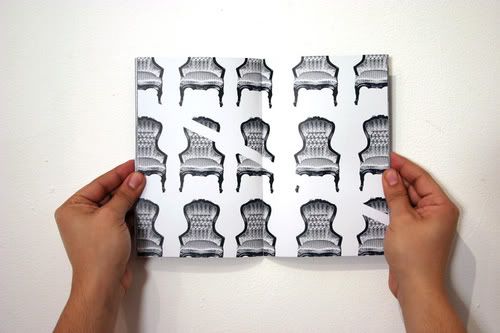
Poetry and Art: The Letting Go
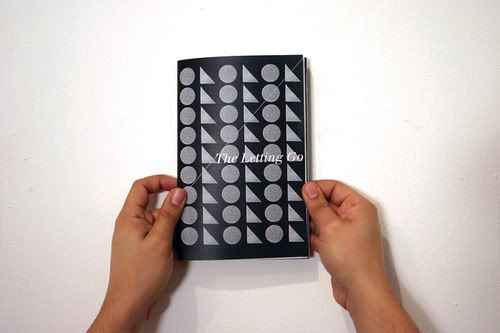
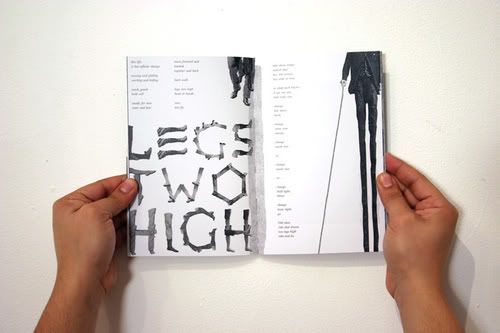
A fusion between poetry and art.
Reference point on how narrative form is depicted in a artist's book manner. The relationship between the poetry and the images reemphasize the text itself.
The elements of design used in this book reminded us about the destructive art by the Dada from the modern art.
Source
Friday, October 16, 2009
Wednesday, October 14, 2009
Pig 05049 by Christien Meindertsma
‘PIG 05049′ by Dutch designer Christien Meindertsma, a book documenting the products made from a pig, won the Play category of the Index Awards, which were announced yesterday.
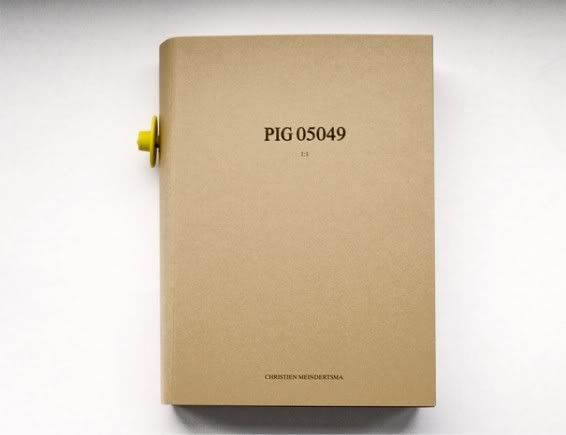
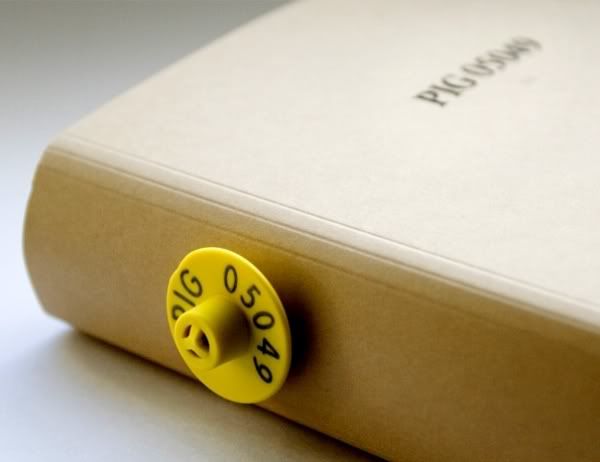
Name of a pig whom was tagged with number 05049, was raised on a Dutch farm. And this book took her 3 years to find out where did the pig go after death. The pig was made into products and related to bullets.
Many kids nowadays have the problem even to visualise the animals, like pigs or chicken. They may just appear like a drawn picture in their mind instead of a live animal.
This is almost like a reverse analogy of what is happening to our world and addressing the the number of by-products one pig can be made into.
The aim of this book is to raise the awareness of our environment. Knowing where our primary resources come from, and hopefully, cherish them as if they are the first and the last on earth.
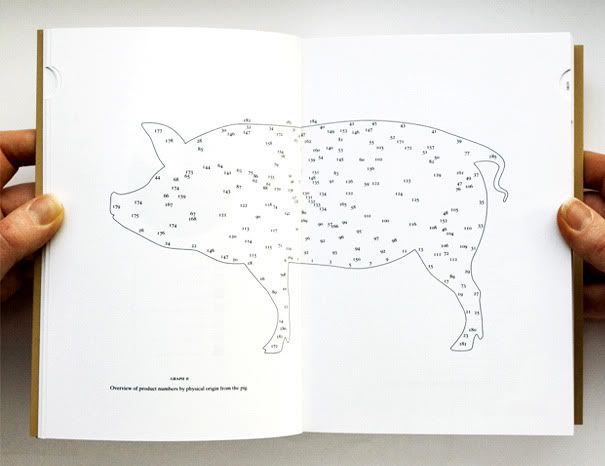
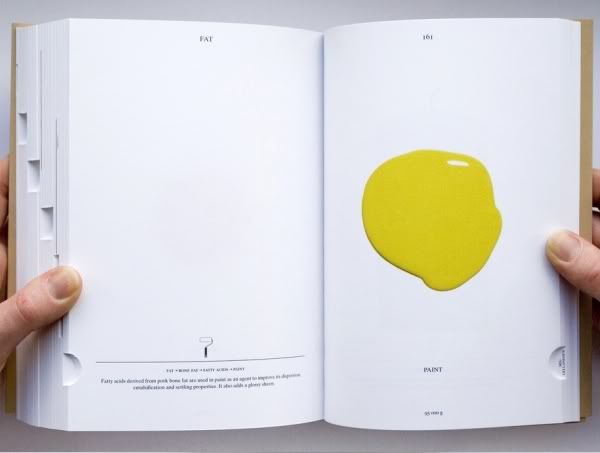
Her pages consist of minimium text and she emphasize on the visual statement on each page. It is also interesting to note that the visuals in the book are of 1:1 actual scale. An exhibition was also put up to publicize the idea. All the products were placed physically in a supermarket cooling fridge.
Poor Mr Pig...but its a lucky chap to have such a massive record of its after life.
Watch this video on how she and her prof talks about the project.
Website
Name of a pig whom was tagged with number 05049, was raised on a Dutch farm. And this book took her 3 years to find out where did the pig go after death. The pig was made into products and related to bullets.
Many kids nowadays have the problem even to visualise the animals, like pigs or chicken. They may just appear like a drawn picture in their mind instead of a live animal.
This is almost like a reverse analogy of what is happening to our world and addressing the the number of by-products one pig can be made into.
The aim of this book is to raise the awareness of our environment. Knowing where our primary resources come from, and hopefully, cherish them as if they are the first and the last on earth.
Her pages consist of minimium text and she emphasize on the visual statement on each page. It is also interesting to note that the visuals in the book are of 1:1 actual scale. An exhibition was also put up to publicize the idea. All the products were placed physically in a supermarket cooling fridge.
Poor Mr Pig...but its a lucky chap to have such a massive record of its after life.
Watch this video on how she and her prof talks about the project.
Website
Subscribe to:
Posts (Atom)